Short reads, deep dives and fresh perspectives, across every subject.
Four centuries before European thinkers invented sociology, fourteenth-century scholar Ibn Khaldun analyzed how human societies grow, build wealth, and inevitably decline based on social bonds and economic laws.
Long before satellite GPS, medieval astronomers and navigators used a portable brass instrument called an astrolabe. By combining geometry and star charts, it calculated time, direction, and latitude instantly.
Instead of relying solely on royal taxes, medieval Islamic cities funded hospitals, schools, and water fountains through permanent charitable trusts known as waqfs. These legal endowments ensured public infrastructure survived for centuries
Long before modern factories, medieval craftsmen in Cairo built advanced furnaces and chemical recipes that turned raw sand and ash into brilliant, colored glass. Their innovations laid the foundation for modern optics and chemistry.
Long before the industrial revolution, medieval Islamic scholars engineered sophisticated water-driven machinery using closed-loop feedback systems. The brilliant inventions of the Banu Musa brothers and Ismail al-Jazari established the foundational principles of modern fluid control and automated robotics.
Managing a rapidly expanding global empire required more than military strength. Early Umayyad administrators created standardized record-keeping departments, common currency, and unified tax systems that revolutionized governance.
While much of Europe was in its early medieval period, Baghdad's House of Wisdom housed roughly 400,000 books, employed a small army of translators, and gave the world the word "algebra." For nearly 200 years, it was arguably the single greatest concentration of scientific knowledge on the planet — until the Mongols destroyed it in 1258.
In 859 CE, a woman named Fatima al-Fihri spent her entire inheritance building a mosque in Fez, Morocco. It grew into the University of al-Qarawiyyin — recognized today by UNESCO and Guinness World Records as the oldest continuously operating, degree-granting university on Earth, still teaching students more than 1,160 years later.
In the interior of Sindh, a spiritual movement known as the Hurs waged a relentless, decades-long guerrilla war against British colonial rule, prompting the empire to enact draconian martial laws.
In February 1946, Indian and Pakistani sailors aboard the Royal Indian Navy ship HMIS Hindustan in Karachi harbor rose in armed revolt against British military commanders, rattling the foundations of the departing empire.
Standard colonial records framed the 1857 War of Independence as a sudden military mutiny. In reality, rural Sufi networks in Punjab and Sindh organized sustained anti-colonial peasant resistance against British annexation.
Long before modern socialist theories emerged in Europe, an 18th-century Sufi scholar in Sindh launched a revolutionary communal farming movement based on land reform and peasant rights, facing execution by the Mughal state.
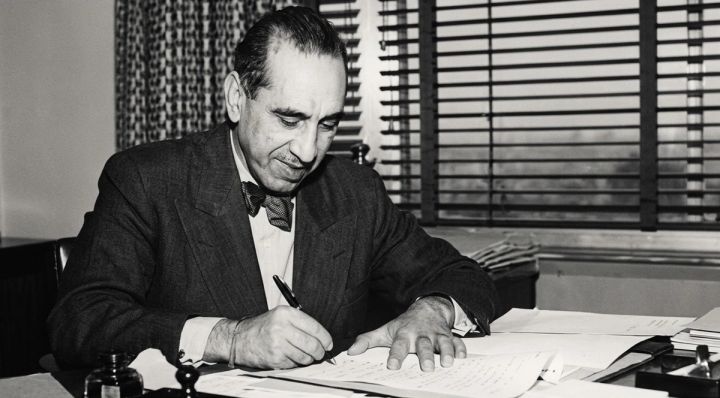
Traditional Urdu satire relied heavily on formal verse and grand political critique. Patras Bokhari transformed the genre by introducing lighthearted, relatable irony about everyday middle-class life.
Early radio broadcasts and mid-century Pakistani cinema played a pivotal role in shaping urban identity. These mass media platforms modernized the Urdu language while reflecting changing societal norms and gender roles.
Bringing the fluid, cursive Nastaliq script of Urdu into digital computers required massive software engineering breakthroughs. Complex font rendering engines solved technical hurdles that standard Western typography could not handle.
The socioeconomic barrier between English-medium and Urdu-medium education creates deep career disparities in South Asia. Analyzing this linguistic divide reveals how language policy impacts social mobility and class structures.
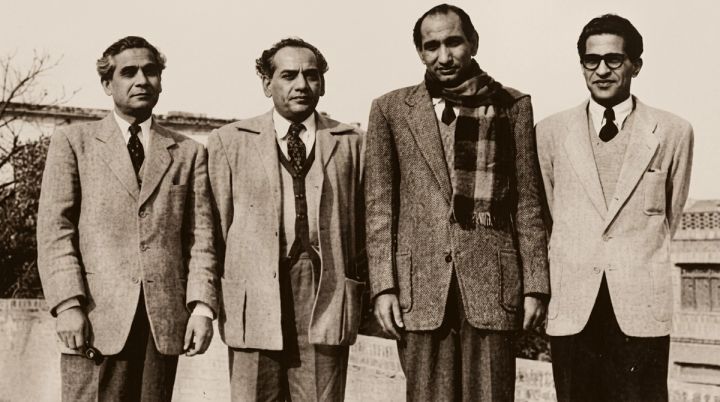
Formed in the 1930s, the Progressive Writers' Movement transformed South Asian literature by shifting poetry and prose from romantic idealism to sharp social realism. Their bold works tackled feudal exploitation, gender inequality, and colonial oppression across the subcontinent.
Nineteenth-century Victorian authors published their novels in weekly and monthly magazine installments. This commercial publishing format forced writers to master cliffhangers and episodic narrative pacing.
English has evolved far beyond a basic communication tool into the primary economic currency of international trade, global finance, and aviation. Mastering global English provides profound financial and professional advantages across modern labor markets.
The global dominance of English carries deep cultural and economic power dynamics that threaten indigenous languages. Critical linguistic analysis reveals how language spread affects local knowledge systems.
The historical spread of English across former colonies transformed it from a rigid national dialect into a flexible global network of distinct languages. Post-colonial writers have reshaped English grammar, local expressions, and narrative structures to tell stories on their own terms.
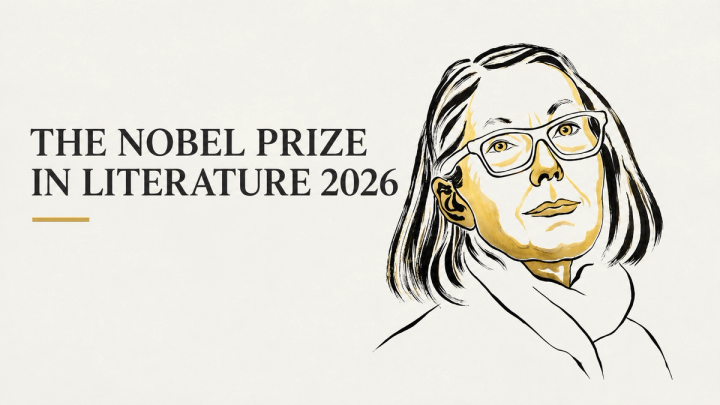
Canadian poet and classicist Anne Carson has been awarded the 2026 Nobel Prize in Literature for her inventive body of work. Her unique writing merges ancient Greek tragedy with modern poetic forms to explore human grief, desire, and language.
As climate warming accelerates alpine glacier melt, unstable lakes impounded by loose gravel moraines pose catastrophic flood risks to downstream communities. Earth observation satellites using synthetic aperture radar monitor dam deformation to predict glacial lake outburst floods.
Recent archaeological research and soil core isotope analysis at Mohenjo-daro reveal how the Bronze Age Indus Valley civilization managed monsoonal flooding and urban sanitation. Their sophisticated brick infrastructure and standardized metallurgy demonstrate unprecedented pre-historic urban planning.
Mount Everest is the highest point above sea level, and the Mariana Trench holds the deepest, but neither title is as simple as it sounds. Depending on how you actually define "highest" or "deepest" — from sea level, from Earth's center, or from a mountain's true base — the record holders change completely.
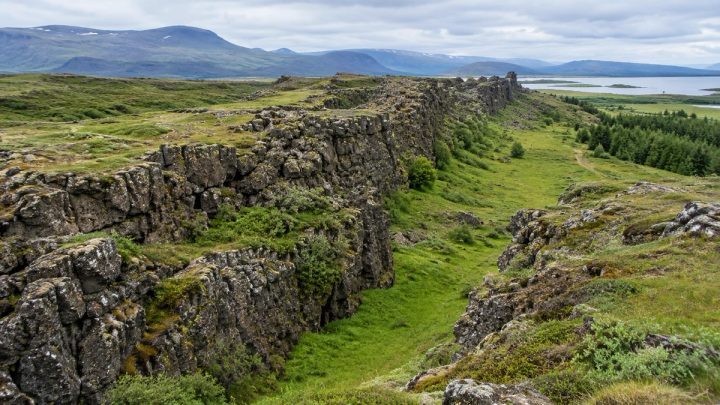
Whatever you're standing on right now is drifting — slowly, constantly, and measurably, at a speed scientists compare to how fast your fingernails grow. It took decades for scientists to accept this, and GPS satellites now track it happening in real time, down to the millimeter.
The second-generation Tesla Roadster pushes automotive acceleration past traditional mechanical limits by combining electric torque, ground-effect suction, and cold-gas thrusters. Examining its engineering reveals how fluid mechanics and pneumatic momentum transfer redefine high-performance transport.
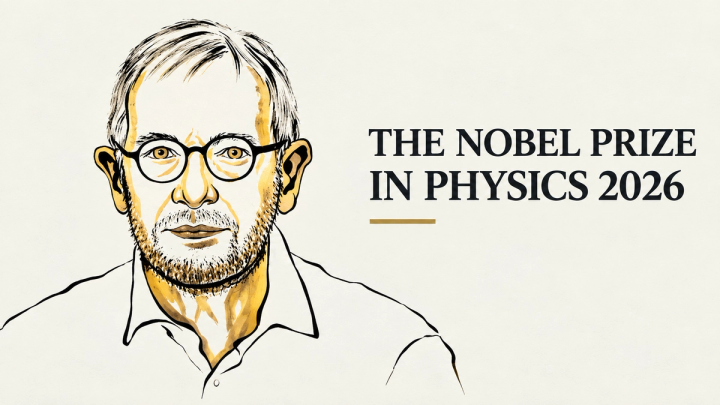
Belgian particle physicist Francis Halzen won the 2026 Nobel Prize in Physics for his role in building the IceCube Neutrino Observatory. His work detected high-energy cosmic neutrinos, opening an entirely new window onto extreme astrophysical events in the universe.
Two of physics' most trusted theories — the one that explains gravity and the one that explains atoms — flatly contradict each other once you zoom in far enough, leaving no real answer for what's happening inside a black hole. One proposed fix says space itself isn't smooth at all. It's made of tiny woven threads, with a smallest possible size that nothing can go below.
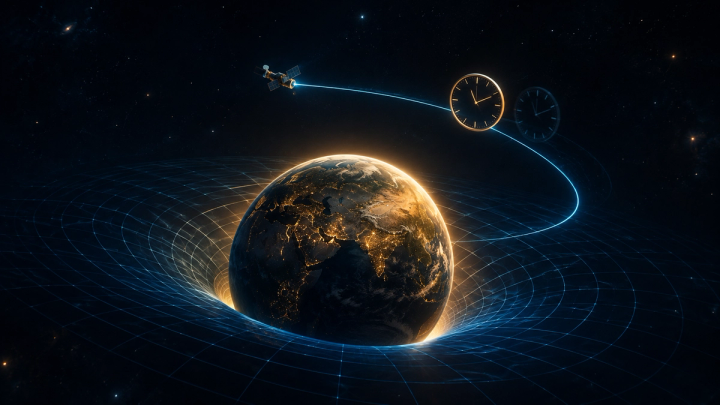
Every GPS satellite in orbit carries a clock that engineers deliberately mistune before launch — because left alone, it would drift from Earth time by 38 microseconds a day. Behind that fix is one of the strangest proven facts in physics: there's no single "now" shared by everyone in the universe, only clocks running at different speeds depending on how fast you're moving and how close you are to a strong gravity source.
Industrial chemistry long relied on toxic chemical solvents to extract coffee, oil, and medicines. By squeezing carbon dioxide under high pressure and heat, scientists create a clean, safe fluid that dissolves compounds without leaving poisonous residues.
Old television and computer screens needed heavy backlight lamps behind liquid crystals to illuminate pixels. Modern OLED screens use paper-thin layers of carbon-based organic molecules that light up individually when electric current passes through them.
Metal-Organic Frameworks are custom-engineered porous crystalline materials capable of trapping specific gas molecules. Their immense internal surface area allows them to selectively capture carbon dioxide directly from industrial smokestacks and atmospheric air.
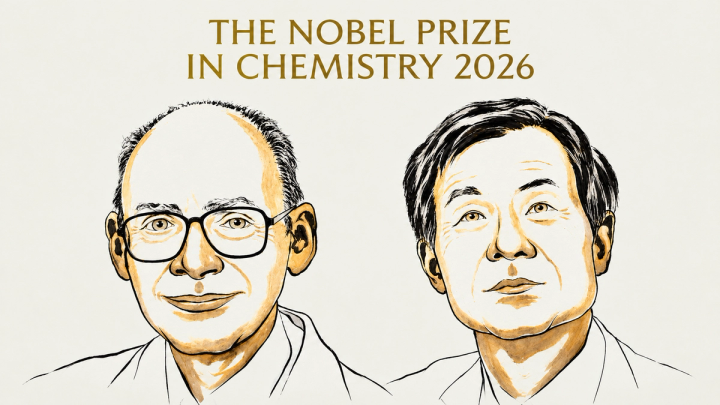
The 2026 Nobel Prize in Chemistry was awarded to Henri B. Kagan and Kenso Soai for discovering non-linear effects and autocatalysis in asymmetric organic synthesis. Their research explains how chemical reactions can selectively produce specific single-handed molecules crucial for pharmaceutical development.
Every day, the human immune system encounters tons of foreign proteins from food and beneficial intestinal bacteria without launching an aggressive inflammatory attack. Specialized intestinal epithelial signaling pathways actively cultivate systemic immunological tolerance to maintain gut health.
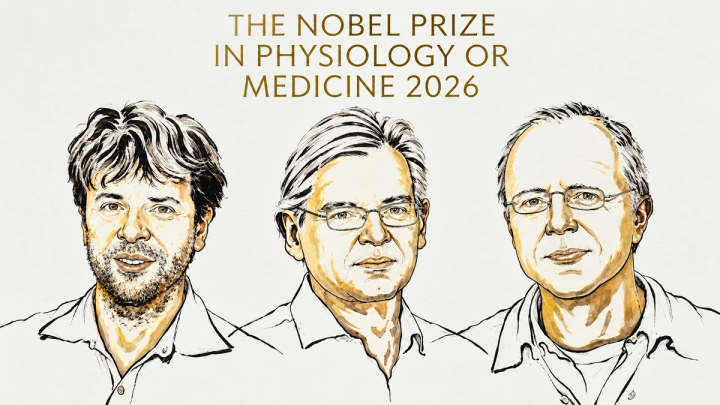
The 2026 Nobel Prize in Physiology or Medicine was awarded to Karl Deisseroth, Peter Hegemann, and Georg Nagel for discoveries leading to optogenetics. Their work allows scientists to manipulate individual nerve cells in living brains using light, transforming neuroscience.
A man with total, permanent blindness walked down a hallway full of obstacles without hitting a single one — while honestly insisting he couldn't see anything at all. The condition is called blindsight, and the science behind it reveals something strange about every brain, sighted or not: a surprising amount of what your eyes take in is processed and acted on without you ever consciously knowing about it.
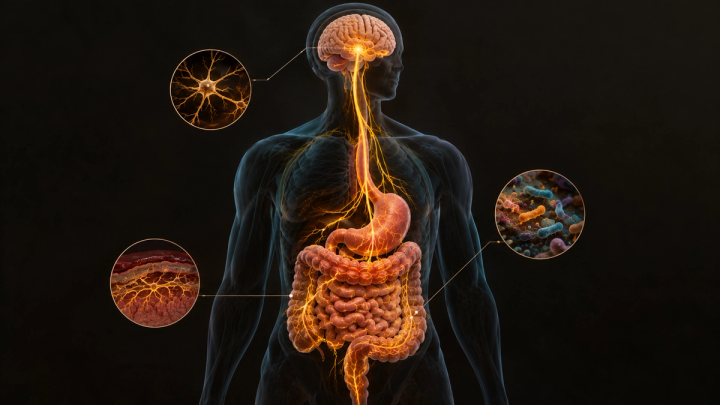
Your intestines contain their own independent nervous system, with more neurons than your entire spinal cord, producing most of your body's serotonin and sending most of its messages upward, not down. Real experiments — including swapping gut bacteria between mice — show this second nervous system can directly change stress hormones and even personality-like behavior.
When a society's language and legal concepts are designed exclusively by dominant groups, disadvantaged communities struggle to name or report their unfair experiences. Philosopher Miranda Fricker called this silent barrier hermeneutical marginalization.
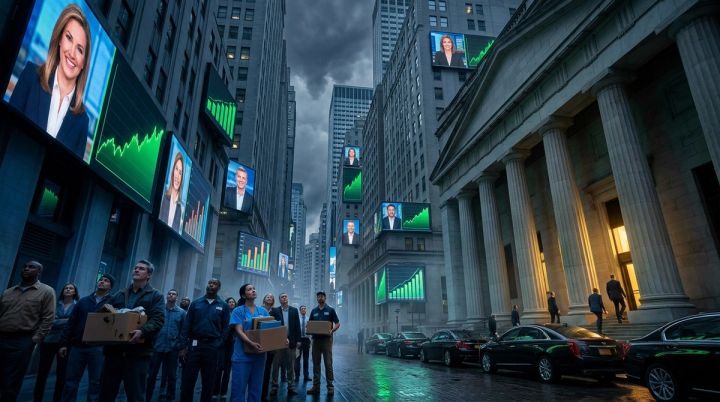
Financial markets are often described as objective calculation engines, but public market trends are deeply shaped by media narratives and institutional forecasts. Understanding narrative architecture reveals how public economic consensus is built.
The combination of state population tracking and corporate digital monitoring has created an ecosystem that collects daily human data. Understanding this structure reveals how predictive technology moves from observing habits to actively influencing personal choices.
Modern social media platforms rely on predictive algorithms that analyze user behavior to keep people scrolling as long as possible. By targeting emotional triggers and personal biases, these automated feeds shape how citizens absorb news and discuss politics.
Software bugs in traditional apps cause mild glitches, but bugs in automated financial smart contracts cause irreversible loss of millions of dollars. Formal verification uses mathematical logic proofs to verify software code before deployment.
The traditional internet stores files on centralized company servers using fragile location web addresses. Decentralized storage networks use mathematical fingerprint hashes and open economic incentives to store data permanently across global computer hosts.
Popular blockchains like Ethereum get congested easily, making transaction fees expensive for regular users. Layer-2 systems solve this by bundling thousands of trades off-chain using two competing mathematical strategies: fraud proofs and validity proofs.
Traditional digital wallets rely on long, fragile secret seed phrases that are easy to lose and impossible to recover. A new technology called Account Abstraction turns digital wallets into smart software programs that support easy account recovery, spending limits, and passwordless logins.
When you buy digital currency on a blockchain, automated computer bots can see your order coming and cut in line to raise your price. This hidden profit system is called Maximal Extractable Value, and understanding it reveals how digital financial markets stay fair.
Massive artificial intelligence models require massive computer memory, making them difficult to run on regular devices. Quantization and model compression reduce file sizes and memory needs without sacrificing intelligence.
Aligning artificial intelligence to behave safely and helpfully traditionally required complex reinforcement learning models. Direct Preference Optimization simplifies this by training models directly on human preference pairs.
Large language models predict text based on statistical probabilities rather than factual lookup, sometimes leading to confident fabrications called hallucinations. Modern mitigation techniques combine external search and multi-agent debate to ensure accuracy.
Modern artificial intelligence models are shifting from relying solely on massive pre-training data toward expanding processing time during inference. Test-time compute scaling allows AI systems to evaluate multiple reasoning paths before outputting answers.
An AI model doesn't "understand" anything when it starts training — it's just a huge collection of random numbers, guessing blindly. A single algorithm from 1986, run millions of times over, is what actually turns that randomness into something that can write sentences, recognize faces, or beat a grandmaster at chess.
Traditional environmental ethics evaluates nature based on its economic or recreational utility for humans. Deep ecology argues that all living ecosystems possess intrinsic moral value independent of human economic desires.
Traditional philosophy often separated the mind from the physical body, viewing thought as purely abstract computation. Phenomenological embodiment demonstrates that our physical sensory interactions with the world shape our very capacity to reason.
Twentieth-century postmodern philosophy challenged the absolute claims of religious, political, and scientific systems. Jean-François Lyotard defined postmodernism as skepticism toward overarching "grand narratives."
Should a self-driving car swerve to save five pedestrians if it means killing its own passenger? The answer depends on which of two centuries-old philosophical positions you hold — and both are actively being coded into the moral logic of real autonomous systems today.
Telling a friend their haircut looks great when it doesn't seems harmless — but philosophers have spent centuries disagreeing about whether any lie, however small or well-intentioned, can ever be genuinely justified. One of history's most rigorous ethical thinkers said no, without exception, even to save a life.
When confronted with clear scientific or historical evidence that contradicts our deeply held beliefs, human brains rarely change their minds. Instead, identity-protective cognition leads us to ignore, dismiss, or reframe facts to protect our social standing.
Modern political debates rarely center on logical policy analysis; instead, they spark intense emotional warfare. Evolutionary psychology reveals how ancient survival instincts lead human brains to treat political teams like competing survival tribes.
Auditory rhythms and visual imagery do not just influence our mood; they directly modulate neural firing patterns, heart rate, and organ function. Psychophysiological research shows how sensory inputs alter biological health.
Human beings make rapid subconscious judgments about trustworthiness and competence based on facial appearance and vocal pitch. Psychological research reveals how these instinctive snap judgments influence social interactions.
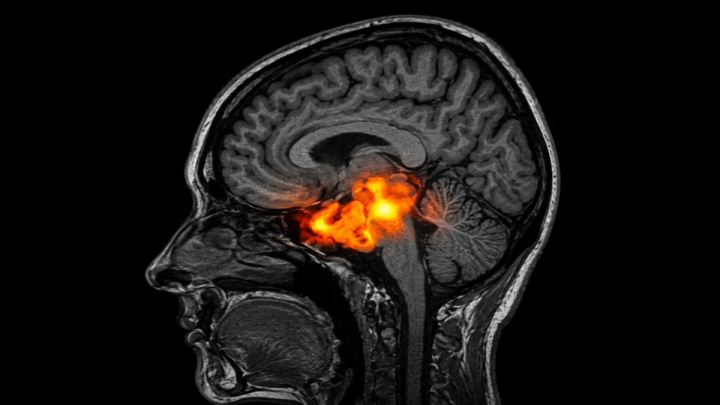
For decades, neuroscientists believed adult brain structures were fixed and unchangeable. The discovery of neuroplasticity proves that the brain continuously reorganizes neural pathways in response to learning, experience, and recovery.
Almost everyone has felt it: a brand new moment that suddenly feels like it's already happened. Scientists have spent decades trying to explain why — and the leading theory today isn't a glitch in your memory at all. It might be proof that your brain's memory-checking system is working exactly as it should.
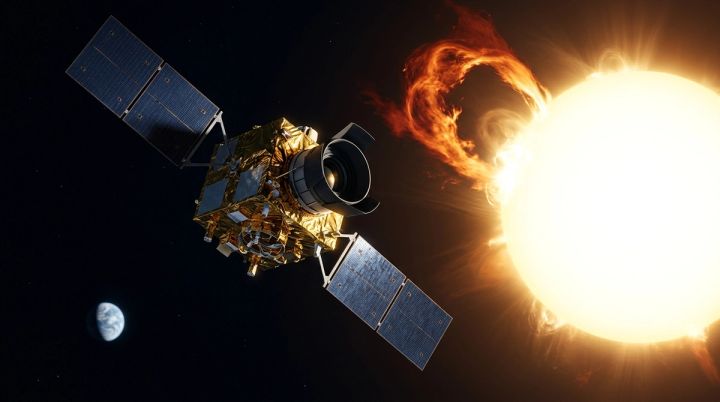
Launched to peer deeper into space than ever before, the James Webb Space Telescope has revolutionized cosmology by capturing ancient galaxies formed during the cosmic dawn and solving long-standing cosmic mysteries.
Keeping a space telescope stable in orbit requires constant fuel consumption. Lagrangian points provide gravitational sweet spots where spacecraft can park permanently with minimal energy use.
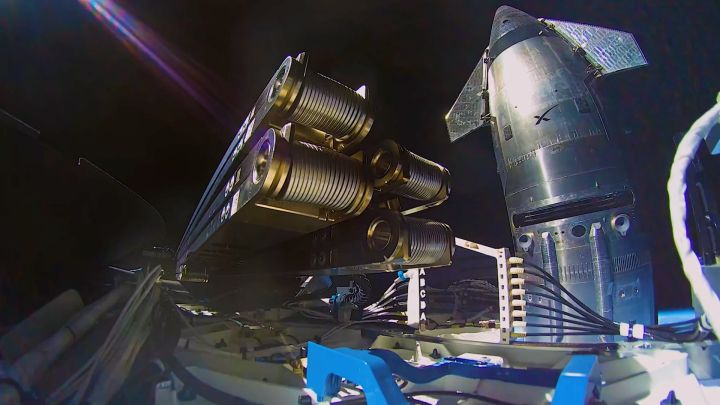
SpaceX’s massive Starship rocket recently completed a milestone flight, reaching stable Earth orbit and deploying functional internet satellites for the first time. Understanding this milestone requires looking beyond the news to explore how orbital velocity works, why massive payloads matter, and the technical hurdles that remain.
Traditional economics assumes people make rational choices, while behavioral economics shows how subtle design choices guide human decisions. Nudge theory uses choice architecture to encourage positive health and financial habits without mandates.
Over four decades, China transformed from a closed agrarian economy into a global industrial powerhouse. This unprecedented rise was driven by state led capitalism, special economic zones, and massive infrastructure investments.
Modern monetary systems rely on fractional reserve banking and interest-bearing debt creation. This structural dynamic concentrates wealth upward, forcing perpetual economic growth and triggering recurring financial crises.
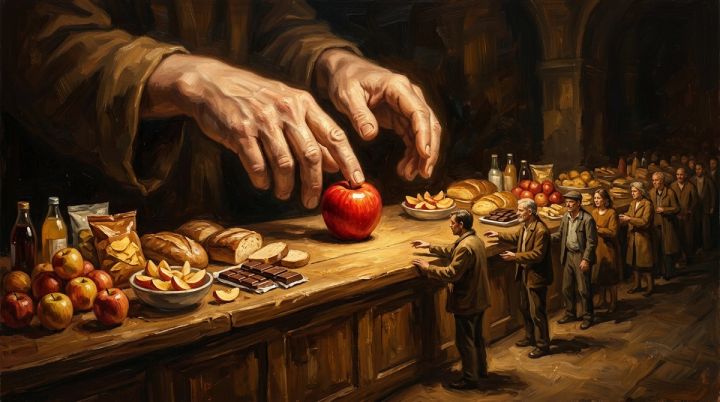
Traditional economics assumes people evaluate prices logically to get the best value for their money. Behavioral economics reveals how subtle psychological triggers like price anchoring, decoy options, and loss aversion influence daily buying habits.
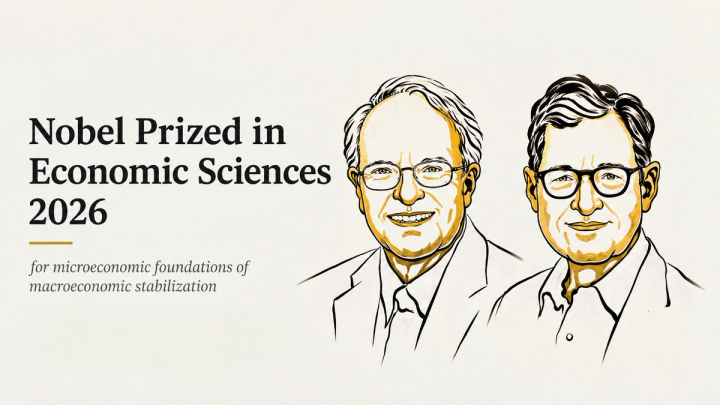
The 2026 Nobel Prize in Economic Sciences was awarded to Robert E. Hall and Michael Woodford for building the microeconomic foundations of macroeconomic stabilization. Their ground-breaking structural models explain how targeted monetary and fiscal policies reduce economic recessions and control inflation.
You don't need a financial crisis for inflation to hurt you. Money sitting still in a low-interest account is quietly losing real value every single day — a slow, invisible process that costs people more over a lifetime than most single financial mistakes ever do.
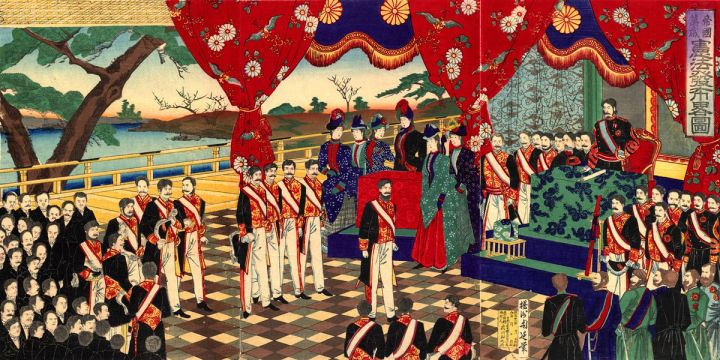
Facing colonial pressure from Western powers in the nineteenth century, Japan overthrew its feudal shogunate and launched the Meiji Restoration, rapidly industrializing into a modern global power in just a few decades.
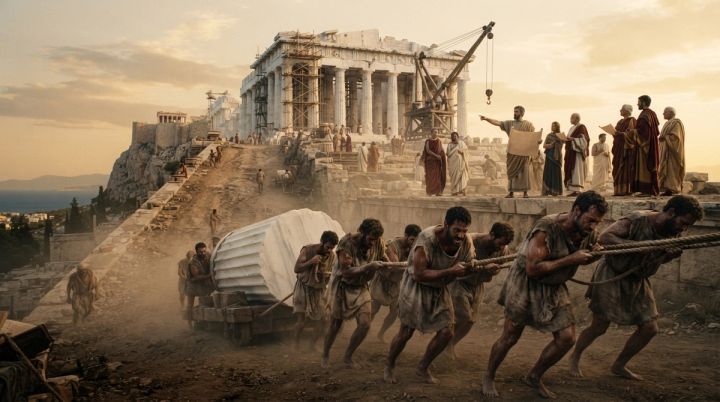
The stunning democratic ideals, architectural marvels, and philosophical breakthroughs of ancient Athens and Rome were not achieved through pure leisure alone. They were built upon the brutal, systemic exploitation of millions of enslaved human beings.
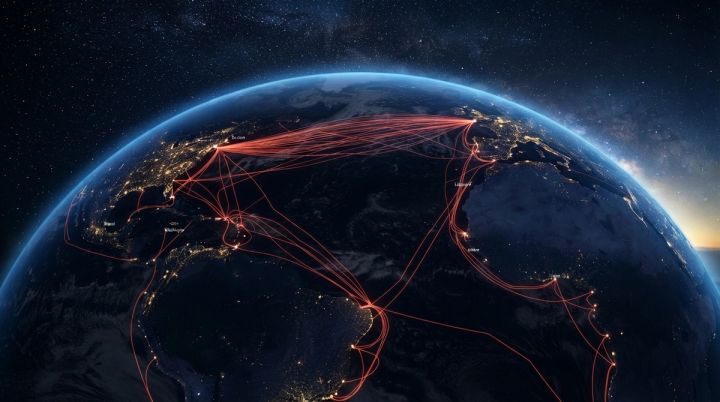
In the nineteenth century, sending a message across the ocean took weeks by steamship. Laying massive copper submarine cables across the Atlantic Ocean compressed global time and created the first instantaneous worldwide communication network.
In 536 CE, a massive volcanic eruption threw millions of tons of aerosol particles into the stratosphere, blocking sunlight and triggering global cooling. Tree-ring density and polar ice core samples reveal how this decade-long climate shock caused crop failures, plagues, and civilizational instability across the globe.
Recent headlines claim that the resting place of Noah's Ark has finally been confirmed inside a boat shaped geological ridge in eastern Turkey. A closer examination of the ongoing scientific investigations, geological processes, and sacred texts reveals a far more nuanced and fascinating reality.
"Fail fast" has become a Silicon Valley cliché for "just try things and don't worry about failing." But the phrase actually has two separate, more technical origins — one in software engineering, one in startup strategy — and the person most associated with popularizing it in business now says he hates how it's commonly used.
In a 2011 study, people were willing to pay 63% more for a plain storage box they'd assembled themselves than for an identical, pre-built version. The effect held even when their assembly job was clumsy — proof that simply putting in effort, regardless of skill, is enough to make people fall for their own creations.