Field of knowledge
Islamic History
A civilization that illuminated the medieval world
Videos
Level 1
Foundation
Coming soon
Level 2
Basics
Coming soon
Level 3
Advanced
Coming soon
Level 4
Masters
Coming soon
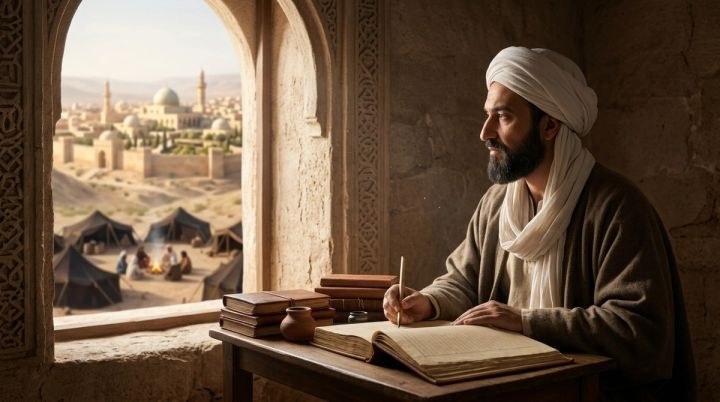
The First Sociologist: How Ibn Khaldun Explained the Rise and Fall of Empires
Four centuries before European thinkers invented sociology, fourteenth-century scholar Ibn Khaldun analyzed how human societies grow, build wealth, and inevitably decline based on social bonds and economic laws.

The Pocket Universe: How Medieval Astronomers Mapped the Stars
Long before satellite GPS, medieval astronomers and navigators used a portable brass instrument called an astrolabe. By combining geometry and star charts, it calculated time, direction, and latitude instantly.
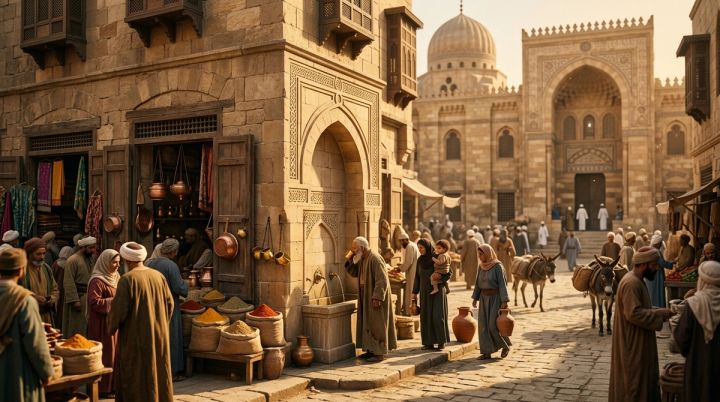
The Forever Trust: How Endowments Built Medieval Cities That Lasted
Instead of relying solely on royal taxes, medieval Islamic cities funded hospitals, schools, and water fountains through permanent charitable trusts known as waqfs. These legal endowments ensured public infrastructure survived for centuries
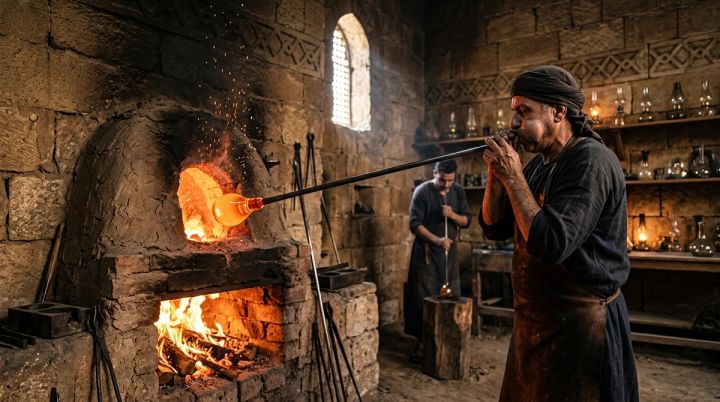
The Secret Furnace: How Medieval Artisans Mastered the Art of Glass
Long before modern factories, medieval craftsmen in Cairo built advanced furnaces and chemical recipes that turned raw sand and ash into brilliant, colored glass. Their innovations laid the foundation for modern optics and chemistry.

The Genesis of Automation: Hydraulic Engineering in the Medieval Islamic World
Long before the industrial revolution, medieval Islamic scholars engineered sophisticated water-driven machinery using closed-loop feedback systems. The brilliant inventions of the Banu Musa brothers and Ismail al-Jazari established the foundational principles of modern fluid control and automated robotics.
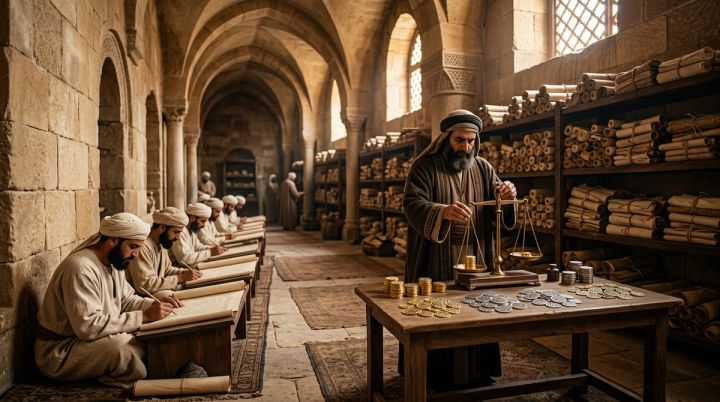
The Paper Trail: How Early Bureaucrats Invented Modern Government Record-Keeping
Managing a rapidly expanding global empire required more than military strength. Early Umayyad administrators created standardized record-keeping departments, common currency, and unified tax systems that revolutionized governance.
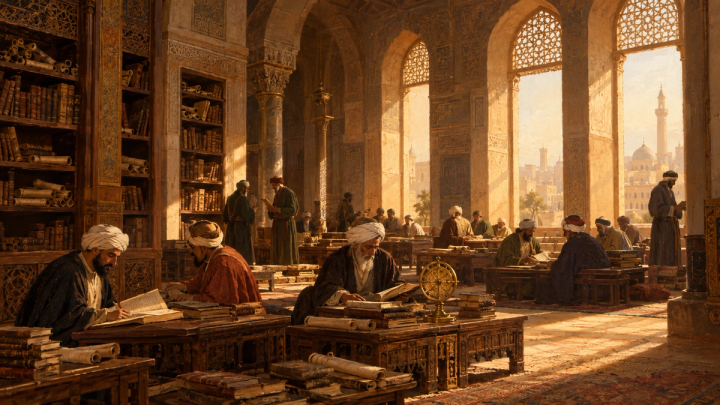
When Baghdad, Not Europe, Was the World's Science Capital
While much of Europe was in its early medieval period, Baghdad's House of Wisdom housed roughly 400,000 books, employed a small army of translators, and gave the world the word "algebra." For nearly 200 years, it was arguably the single greatest concentration of scientific knowledge on the planet — until the Mongols destroyed it in 1258.
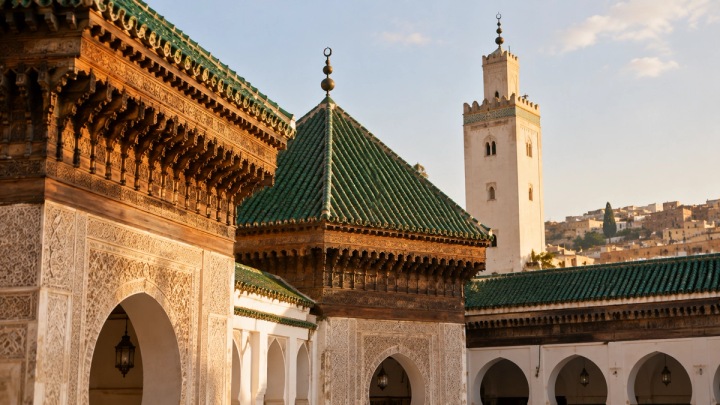
The Woman Who Founded the World's Oldest University
In 859 CE, a woman named Fatima al-Fihri spent her entire inheritance building a mosque in Fez, Morocco. It grew into the University of al-Qarawiyyin — recognized today by UNESCO and Guinness World Records as the oldest continuously operating, degree-granting university on Earth, still teaching students more than 1,160 years later.