Field of knowledge
Economics
How societies choose, trade and create wealth
Videos
Level 1
Foundation
Coming soon
Level 2
Basics
Coming soon
Level 3
Advanced
Coming soon
Level 4
Masters
Coming soon

How Nudge Theory Shapes Public Choices
Traditional economics assumes people make rational choices, while behavioral economics shows how subtle design choices guide human decisions. Nudge theory uses choice architecture to encourage positive health and financial habits without mandates.

How China Engineered Its Economic Rise
Over four decades, China transformed from a closed agrarian economy into a global industrial powerhouse. This unprecedented rise was driven by state led capitalism, special economic zones, and massive infrastructure investments.

How Compound Interest Destroys National Economies
Modern monetary systems rely on fractional reserve banking and interest-bearing debt creation. This structural dynamic concentrates wealth upward, forcing perpetual economic growth and triggering recurring financial crises.

The Psychology of a Price Tag: How Behavioral Economics Guides Consumer Choices
Traditional economics assumes people evaluate prices logically to get the best value for their money. Behavioral economics reveals how subtle psychological triggers like price anchoring, decoy options, and loss aversion influence daily buying habits.
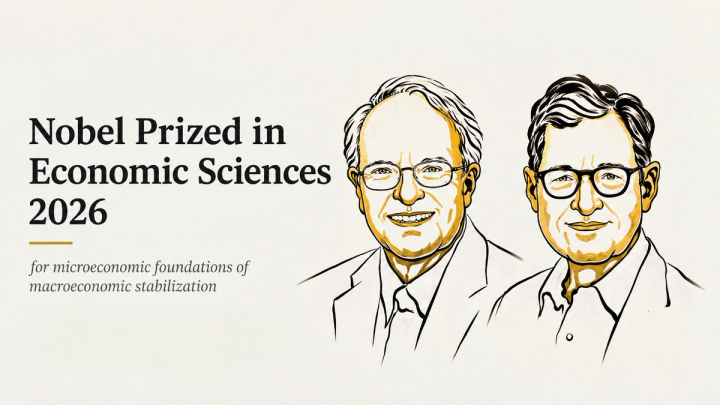
Taming Economic Fluctuations: The Breakthroughs Behind the 2026 Nobel Prize in Economics
The 2026 Nobel Prize in Economic Sciences was awarded to Robert E. Hall and Michael Woodford for building the microeconomic foundations of macroeconomic stabilization. Their ground-breaking structural models explain how targeted monetary and fiscal policies reduce economic recessions and control inflation.

Why Inflation Erodes Your Savings Even When Nothing Dramatic Happens
You don't need a financial crisis for inflation to hurt you. Money sitting still in a low-interest account is quietly losing real value every single day — a slow, invisible process that costs people more over a lifetime than most single financial mistakes ever do.